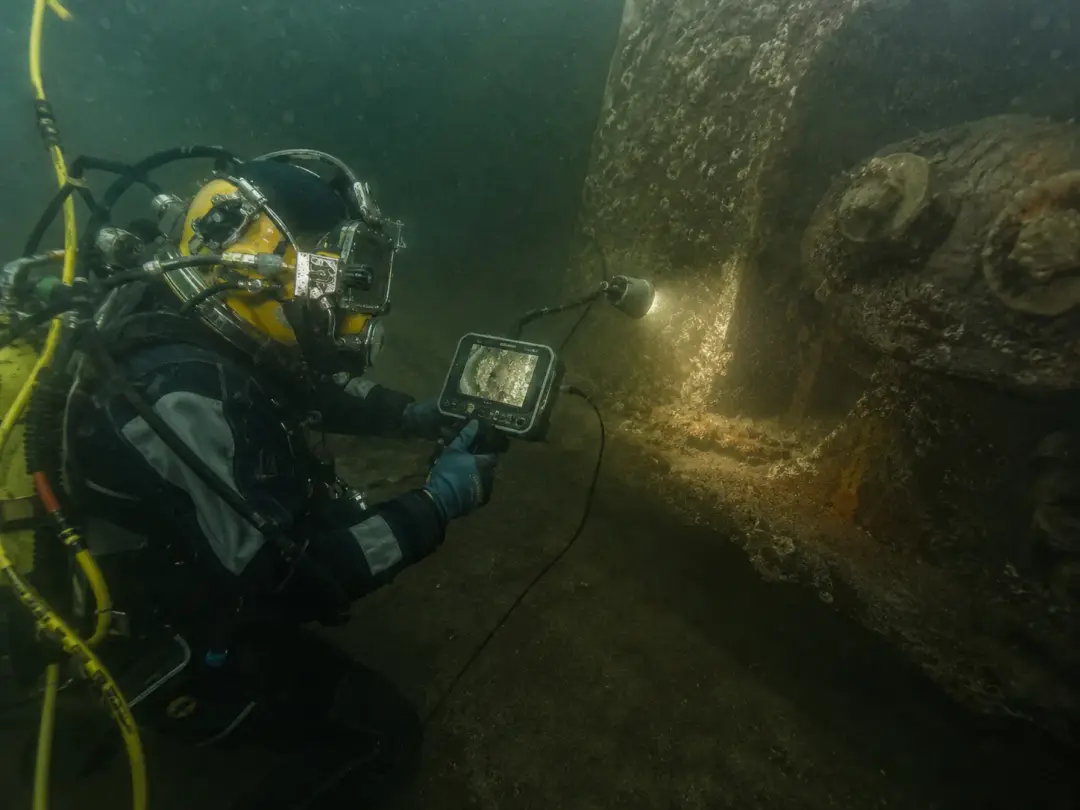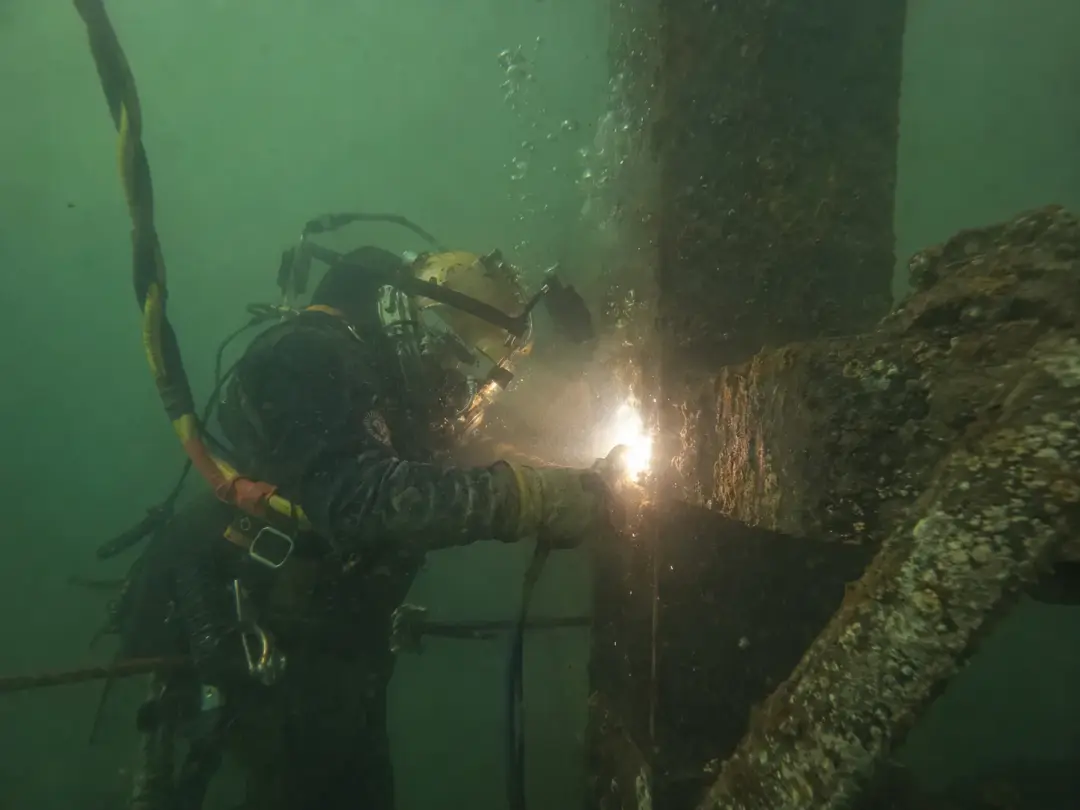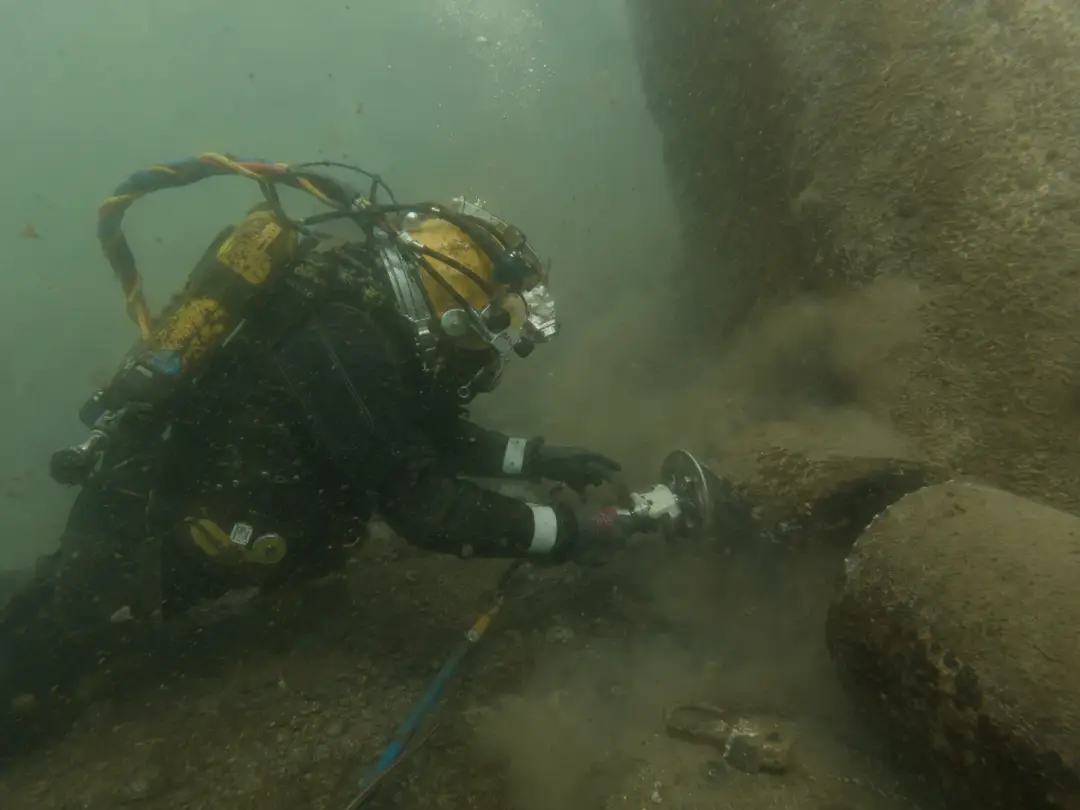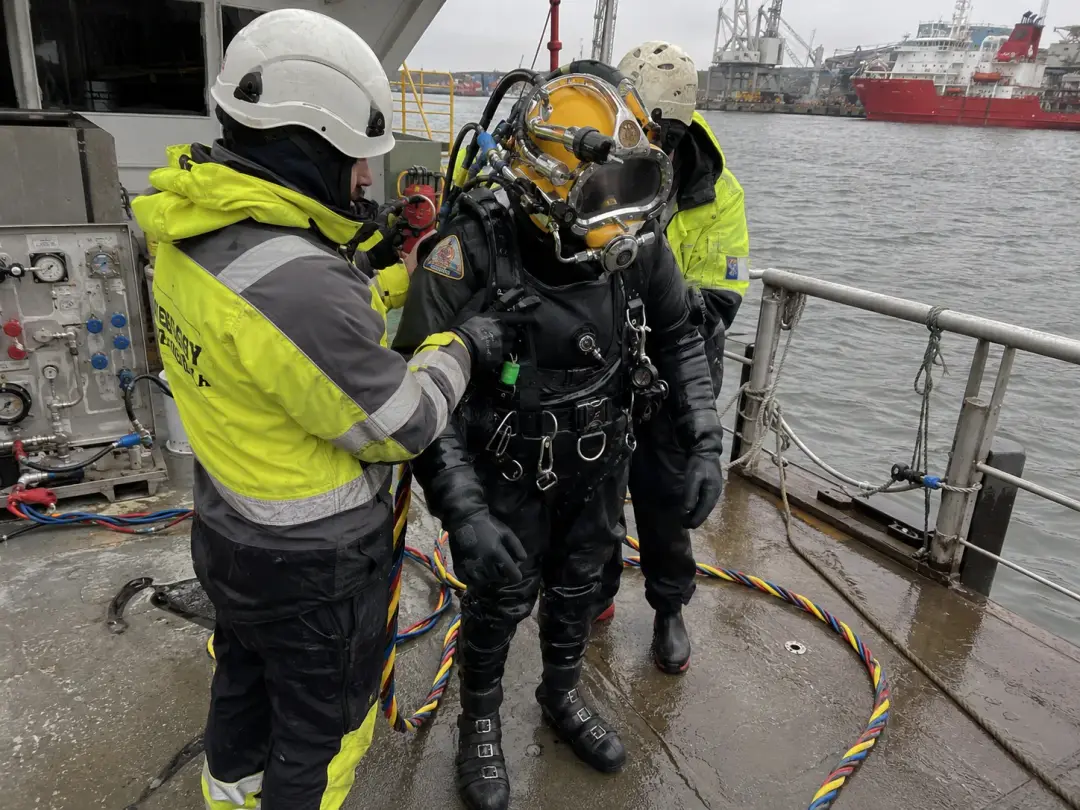
“What does an hour of a diver's time cost?” is the client's most common first question and, at the same time, the hardest. The honest answer is that there is no single price list in this industry, because no two tasks underwater are alike. Inspecting a propeller alongside and welding up a crack in a hull in a current are different jobs in make-up, equipment and risk, even though both are called diving work. This article explains what a quotation is actually built from, so that you can judge any contractor's offer — not only ours.
Why you cannot simply hire one diver
What surprises clients most is that even for the simplest task one person cannot go into the water alone. Under the occupational safety rules for diving operations, a dive is supported by a diving spread — at least three qualified people: the working diver, the standby diver ready to go in immediately, and the supervisor who runs the dive from the surface. For complex and deep work the team is larger.
So the minimum price of any call-out is not an hour of one specialist's time but the work of a complete spread with a compressor, communications, gear and transport. If a contractor offers a lone diver at a price noticeably below the market, he is saving on safety — and responsibility for an incident at your site will fall in part on you as the client.
Seven factors that determine the cost
- 1
Type of work
Inspection and video survey are the most affordable tasks. Hull cleaning, searching for objects and work on fittings sit in the middle. Underwater welding, cutting, concreting and salvage are the most expensive: these call for highly qualified diver-welders with specialist equipment.
- 2
Depth
As depth increases, the permitted working time shortens and decompression schedules come into play: a task that takes an hour at five metres may need several dives at thirty. The requirements for dive support rise as well.
- 3
Duration and scope
What goes into the quotation is not “time underwater” but the whole cycle: mobilising the spread, setting up on site, the dives, demobilising and issuing the report. A short task is priced as a minimum call-out — the spread has to be set up in full even for fifteen minutes in the water.
- 4
Equipment
Hydraulic tools, underwater cutting equipment, thickness gauges, video systems, pontoons and craft — we include only what the task genuinely needs. The more precisely the scope is defined, the less gets added to the estimate just in case.
- 5
Logistics
Work within Murmansk costs less than call-outs to remote parts of the region — Teriberka, Kandalaksha, the inlets of Kola Bay. At remote sites there is also the cost of moving the spread, accommodating the team and sometimes chartering a vessel.
- 6
Urgency
Planned work agreed several days ahead is always cheaper than an emergency call-out at night or at a weekend. The emergency premium is the price of the spread dropping its current jobs and going out immediately.
- 7
Reporting and supervision
If the work is carried out under a Register surveyor, with photo and video record, measurement protocols and certificates in the prescribed form, the time spent documenting it is built into the price. For a commercial client that is not an option but a necessity: without the paperwork the work formally does not exist.
Price guidance
There are no standard tariffs in the industry, but it helps to know the order of magnitude. The figures below are averages drawn from published price lists and tenders of Russian diving companies for 2026. They are preliminary numbers for budgeting, not a price list: the actual cost is worked out as a quotation for the specific task — get in touch and we will prepare one.
- Diver inspection and survey with video record — 15,000–25,000 ₽ per call-out.
- A diving spread shift (8 hours) — 50,000–85,000 ₽ depending on the work and equipment involved.
- Underwater welding — from 36,000 ₽ per linear metre of weld; underwater cutting — from 24,000 ₽ per linear metre.
- Cleaning fouling off the hull of a medium-tonnage vessel — from 300,000 ₽ per hull; the final figure depends on the area and the extent of the growth.
How to spend less on diving work
- Give as much information as you can up front
- Vessel type and draught, where she lies, drawings of the item, photographs from the surface, the nature of the damage — every parameter you pin down removes a contingency allowance from the quotation.
- Plan ahead
- Regular inspection of a quay or a hull on a schedule costs less than an emergency call-out once the problem has already happened. A defect found during an inspection is almost always cheaper than a defect that finds you.
- Combine tasks into one mobilisation
- Mobilising the spread is the fixed part of the price. A hull inspection, anode replacement and cleaning of the sea chest gratings in one visit cost noticeably less than three separate orders.
- Compare what is included, not the bottom line
- A cheap offer with no standby diver, no report and no permits in place is a different service, not the same one at a lower price.
Frequently asked questions
- Is there a minimum order value?
- Yes — the minimum call-out of a spread. Even a five-minute inspection requires the full mobilisation of the team and the equipment.
- Do you work in winter and through the polar night?
- Yes. Kola Bay does not freeze and divers work all year round. On fresh water in winter there is the extra work of cutting and maintaining the ice opening — that is allowed for in the quotation.
- How quickly can you attend an emergency?
- The emergency team mobilises immediately. Call us — we will give you an arrival time and tell you straight away what information we need to prepare.
- Can you work under contract with a company, with payment on completion?
- Yes, we work with organisations under contract and provide the full set of closing documents. Payment terms are agreed when the contract is signed.