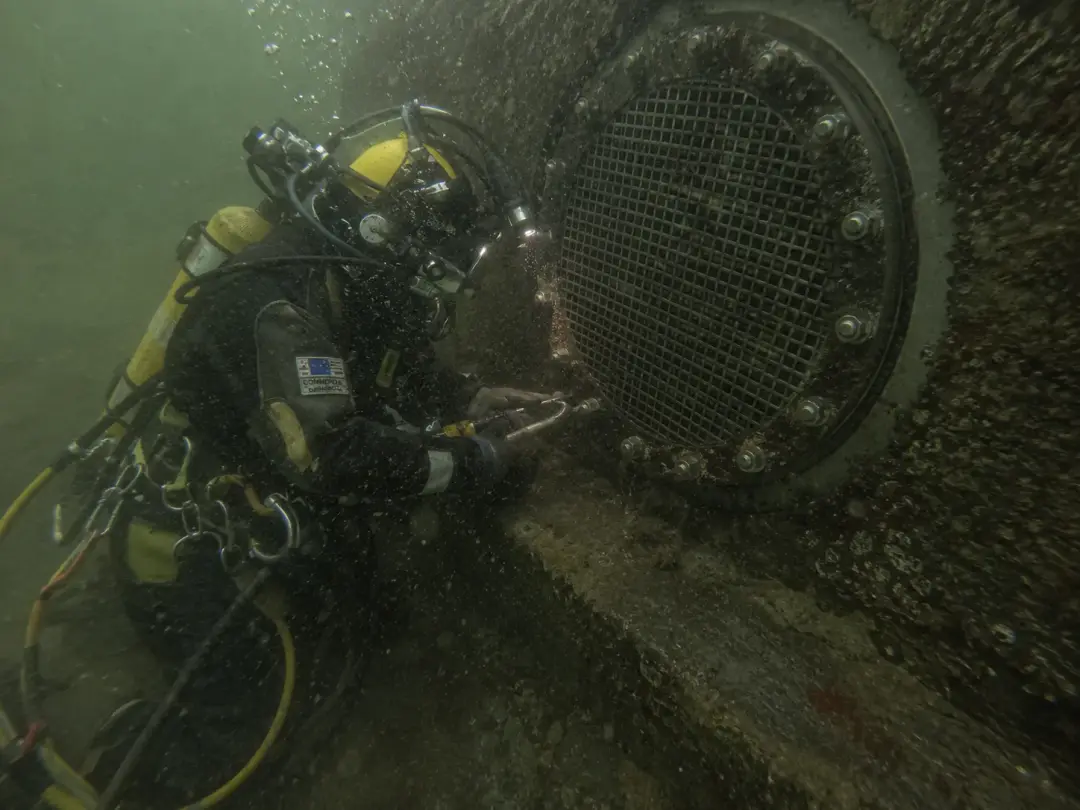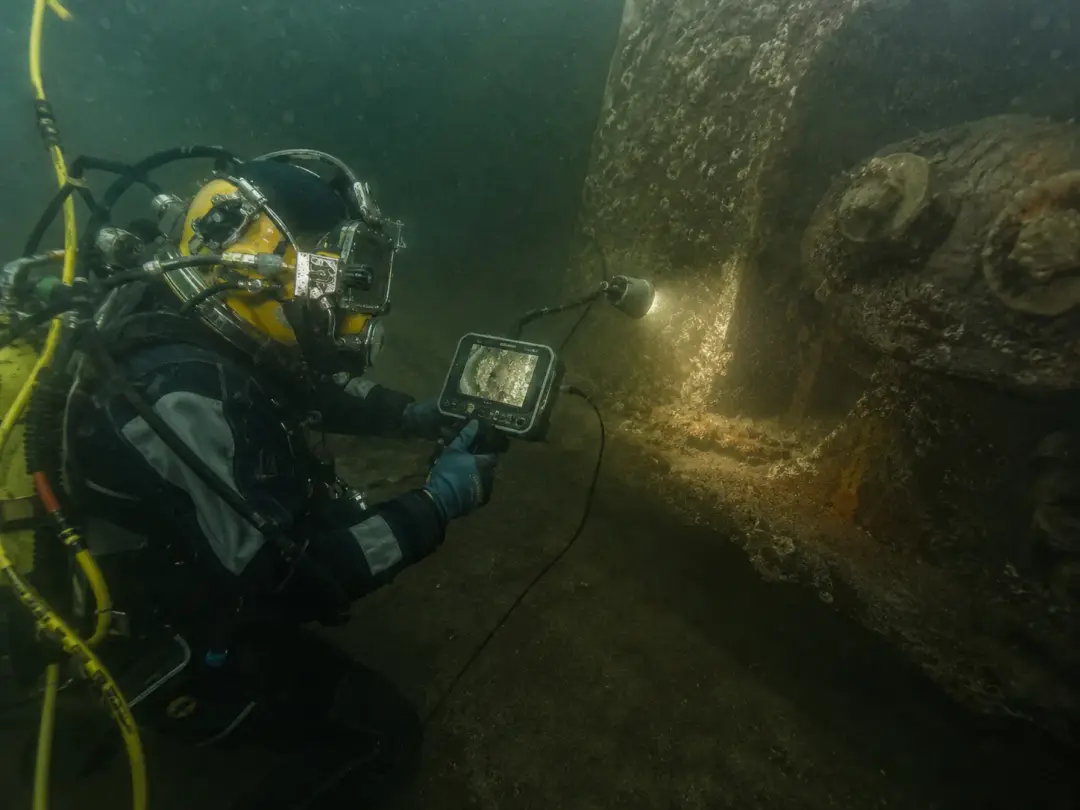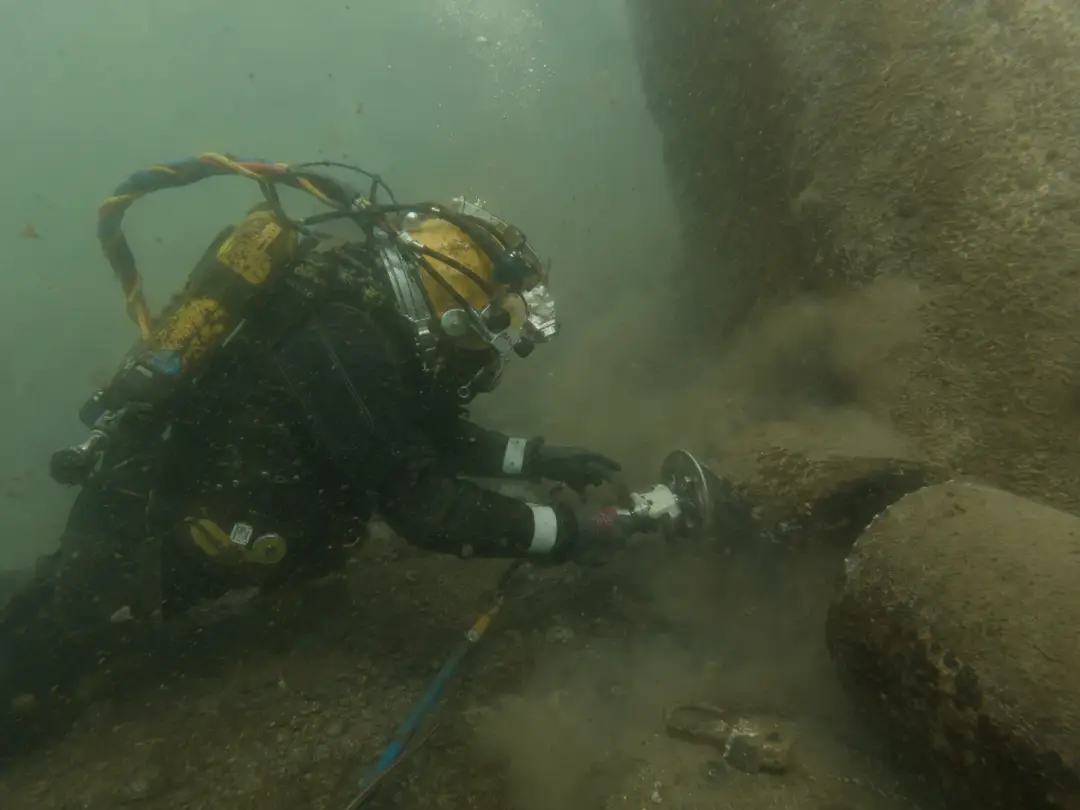
For many contractors, winter is a reason to put underwater work off until it warms up. For a diving contractor in the Arctic it is an ordinary working season: Kola Bay does not freeze, and on frozen lakes and rivers divers work through an opening cut in the ice. Here is how winter dives are organised, why ice helps rather than hinders, and what a client planning winter work should keep in mind.
Why winter is not a stopper
In Murmansk and Kola Bay the sea does not freeze — alongside and at anchor divers work all year round, polar night included. Darkness is dealt with by lighting and video equipment, cold water by the gear; the season has almost no bearing on the timing or the feasibility of the work.
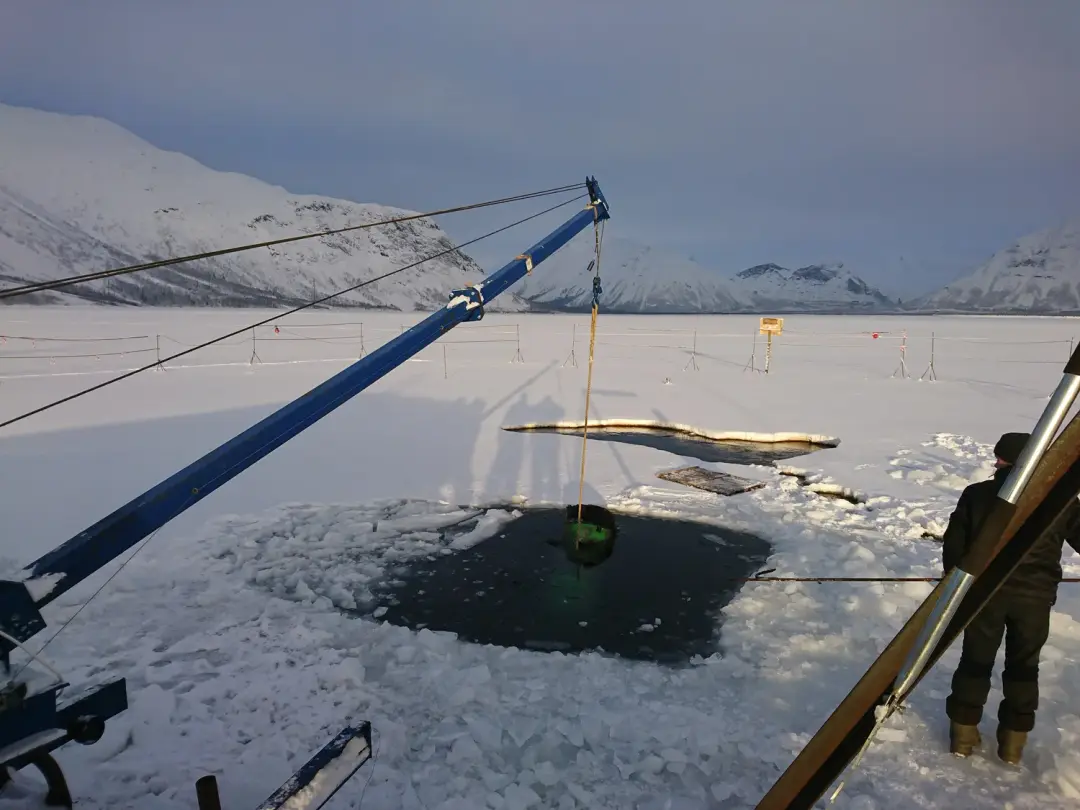
On fresh water the picture is different: ice closes the surface for several months. But that is not a pause either — the work is carried out from the ice itself, through an opening. What changes is not whether the job can be done, but how the site is organised.
Ice is a working platform
Working off the ice often worries clients, but for a diving spread a solid ice cover is a ready-made platform directly above the worksite. No floating crane and no anchor moorings are needed, there is no swell or rolling, and the entry point sits exactly over the object — the diver reaches the work by the shortest vertical route. The price for this is harsh conditions on the surface: frost, wind and a short daylight period. Those risks are handled by how the site is set up.
The ice opening and the shelter: how a site on the ice is built
- 1
Checking the ice and marking out
Before the spread is set up we check that the ice will carry the people and the equipment, and mark out the site above the working point. If the ice will not take the load, we change the approach — working from the shore or from a craft.
- 2
The opening
An opening is cut in the ice through which the dives are made and structures are lowered into the water.
- 3
The heated shelter
Over the opening a heated shelter is erected — an insulated enclosure housing the entry platform, the gear and the dive control station. The shelter protects people and equipment from the frost and stops the opening freezing over.
- 4
Running the dives
From there the spread works as usual: standby diver, constant communications, underwater video monitoring. The supervisor on the surface sees the picture in real time and coordinates the work.
Gear for ice water
- Hot-water suits — the cold does not cut short the diver's working time.
- High-pressure compressors and a decompression chamber — standard dive support in any season.
- Lighting and underwater video — for the polar night and dark water: the client sees the work on the recording.
- Our own transport and equipment — the spread sets up at a remote site without subcontractors.
A winter project in practice: a water intake under the ice
That is how we installed a water intake head on Lake Bolshoy Vudyavr near Kirovsk: the structures were assembled beforehand on the shore, an opening was cut in the ice and a heated shelter erected over it, and the head was lowered to the design level, secured and connected to the pipeline — every step under underwater video control. The project did not wait for summer: the installation went ahead under the ice, with no craft involved.
What a client should allow for in winter
- On ice, the quotation includes setting up the site — the opening and the shelter. It is a known item from the outset, not a surprise part-way through.
- Assembly of structures is better done on shore or in the workshop: reworking anything underwater takes many times longer and costs far more.
- Polar night and frost do not cancel emergency work — we mobilise for emergencies in winter too.
- Planned preventive inspections — of water intakes, quays and hulls — also go ahead in winter: do not put them off until summer if a problem is already showing.
Frequently asked questions
- Do you work through the polar night?
- Yes. Darkness is dealt with by site lighting and underwater lights; video monitoring works exactly as it does in summer. In the Arctic there is no alternative — the polar night lasts more than a month.
- Does winter work cost more than summer work?
- On sea areas that do not freeze, the season has almost no effect on the quotation. On ice there is the extra work of the opening and the shelter — that item is built into the quotation from the start.
- Is it not dangerous for a diver in ice water?
- The dive is supported by the spread: standby diver, constant communications, hot-water suits, decompression chamber. For a contractor experienced in ice work, cold water is a routine condition.
- How thick does the ice need to be?
- Before work begins we check that the ice will carry the people and the equipment. If it will not take the load, we change the site arrangement — working from the shore or from a craft.