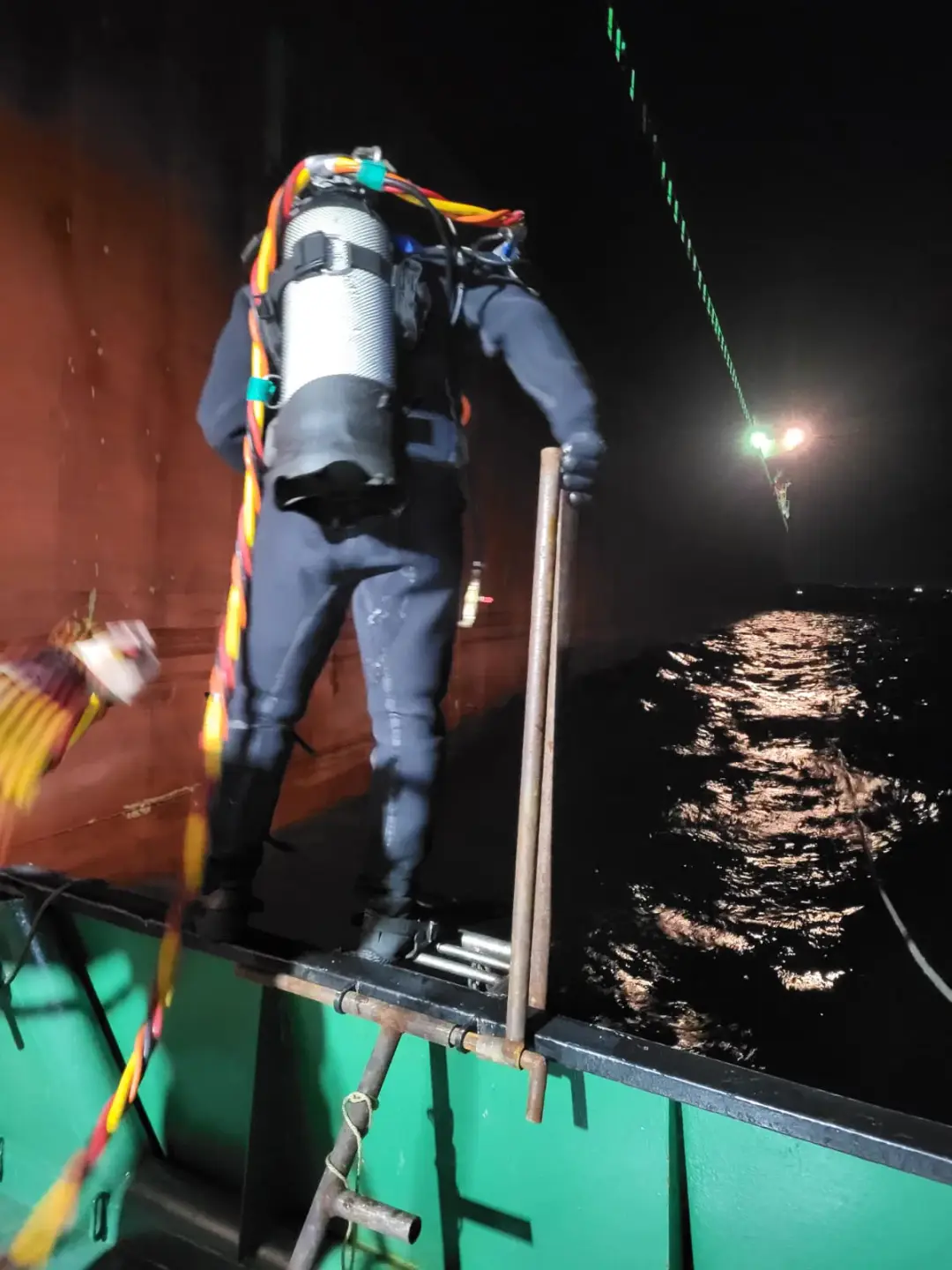
Putting a vessel into dock means weeks of downtime and serious cost: dock hire, towage, withdrawal from service. That is why, in a number of cases, class societies allow the dock examination to be replaced by an in-water survey: divers examine the hull right at the berth or at anchor while the vessel keeps working. Here is how the procedure works, who it suits and what the owner needs to prepare.
What an in-water survey is
An in-water survey (IWS) is an examination of a vessel's underwater hull by divers, witnessed by a class society surveyor, without lifting the vessel out of the water. On the strength of the examination the diving contractor issues a report — the Russian Maritime Register of Shipping (RS) accepts it when confirming or extending the vessel's class.
Replacing the docking with an in-water examination is agreed with the Register in advance — whether it is allowed depends on the type, age and condition of the vessel. The decision in each case rests with the surveyor; the diving contractor's job is to give him a complete and reliable picture of the state of the hull.
When it pays the owner
An in-water survey is worth considering when:
- the intermediate survey is due while the scheduled docking is still a long way off;
- the vessel is in service and every day of downtime is a direct loss;
- the nearest free dock is in another port and the passage there would be expensive;
- the condition of the hull has to be confirmed quickly after touching bottom or a contact — before deciding on docking.
The saving comes from three things: no dock to pay for, no passage to make and no withdrawal from service. The examination takes from a few hours to one or two working days, depending on the size of the vessel and the scope of the work.
What the divers examine
The standard scope of an in-water survey covers:
- The shell plating
- dents, buckling, cracks, the condition of welded seams and of the paint coating.
- Propulsion and steering gear
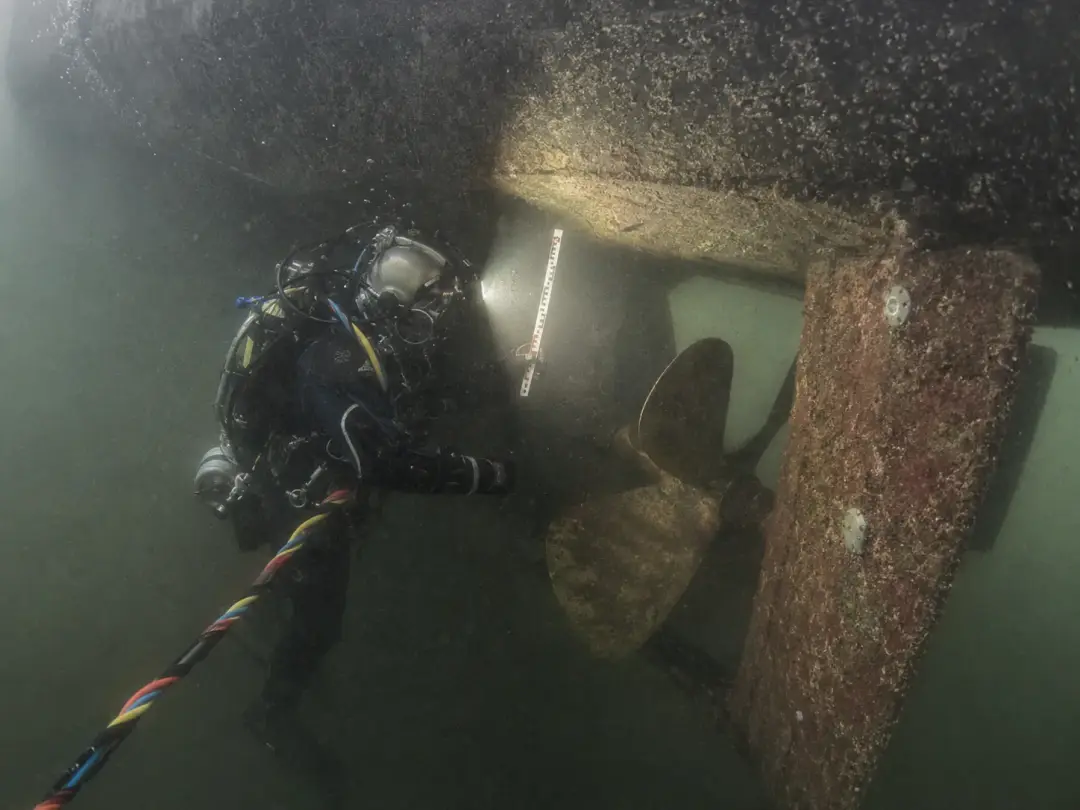
- the propeller (blade edges, entanglement, erosion), the rudder blade, the stern tube arrangement.
- Sea chests and underwater fittings
- sea suction openings, their gratings and the discharge openings.
- Cathodic protection
- the condition of the anodes and how much of them is left.
- Residual thickness measurements
- of the plating, taken with an ultrasonic gauge at the points the surveyor specifies.
The diver records the whole examination on video: the surveyor on the surface sees the picture in real time, speaks to the diver and directs him to the areas of the hull he needs. Photo and video material is attached to the report.
How the procedure goes, step by step
- 1
Application and agreement
The owner applies to the Register and agrees the date. In parallel the owner engages a diving contractor — it matters that the contractor holds a valid Certificate of Recognition from the Register for this type of work, otherwise the results of the examination will not be accepted.
- 2
Preparing the vessel
The vessel should lie at minimum draught and trim; the crew stops any overboard machinery in the area of the examination and displays the warning signals. The crew provides the drawings and the layout of the fittings.
- 3
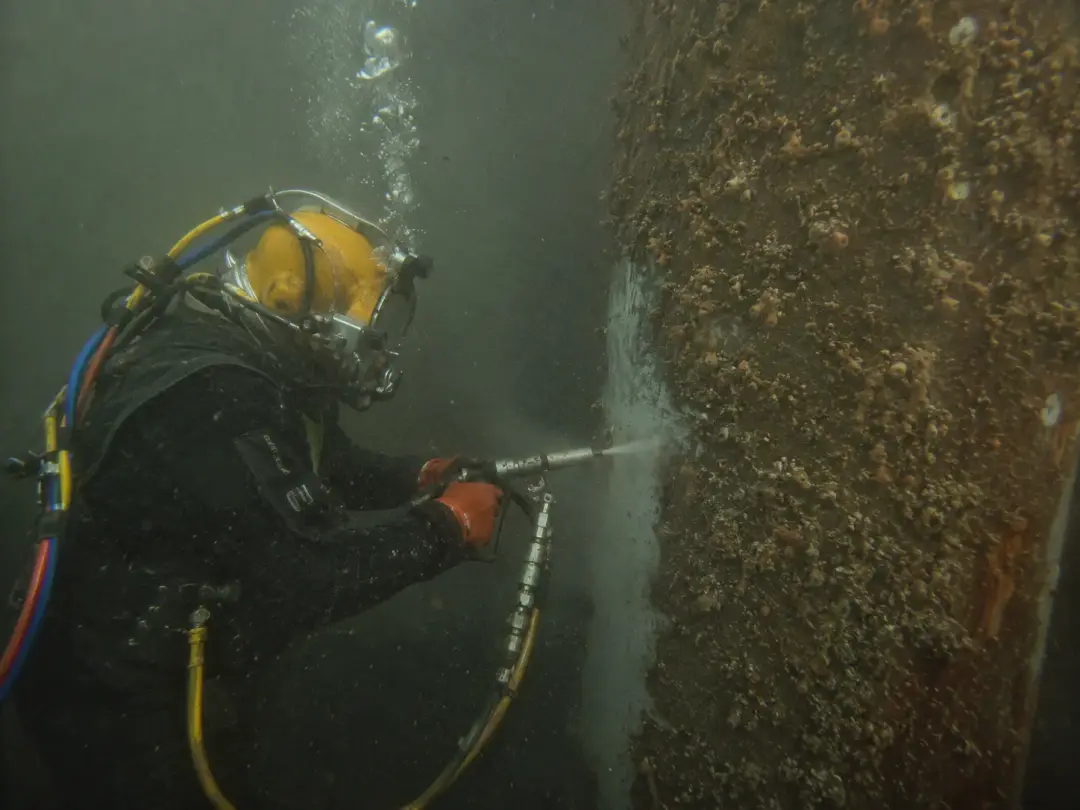
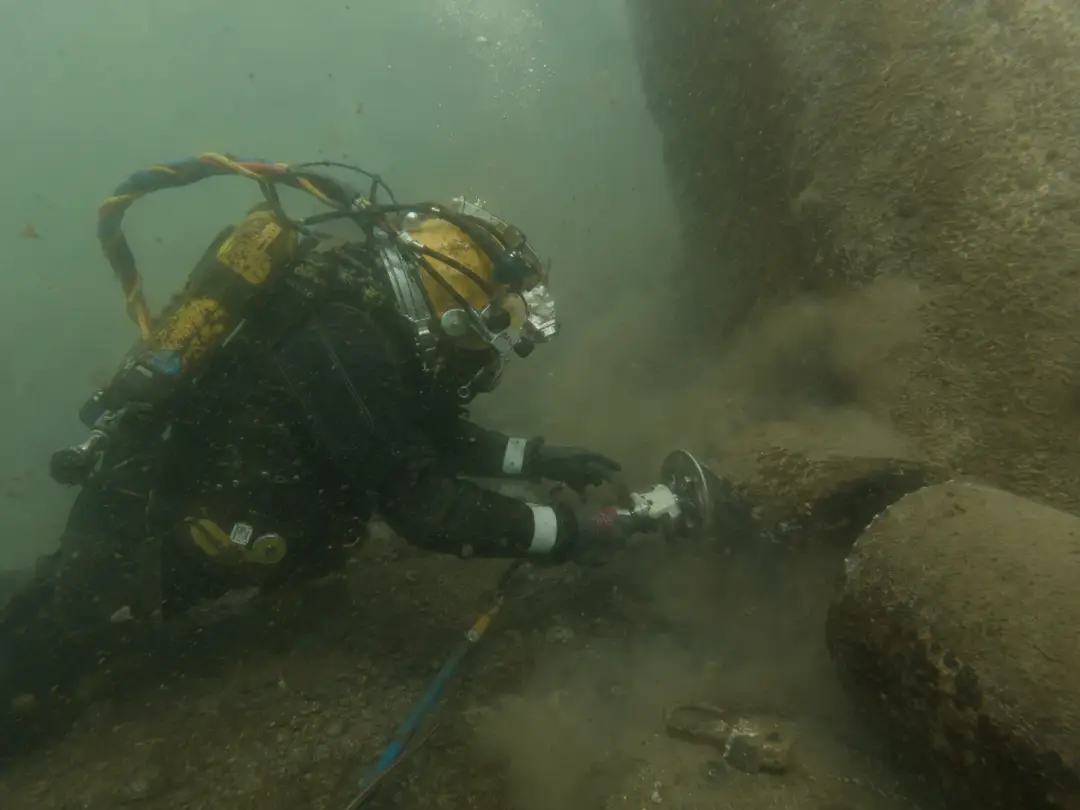
Cleaning the hull
If the hull is fouled, the surveyor cannot assess the condition of the plating — the examination therefore begins with removing the fouling. In the cold water of the Barents Sea growth builds up more slowly than in southern ports, but a season is enough to accumulate plenty of it.
- 4
The diver examination
The diving spread is set up alongside, the diver works his way around the hull to a pattern agreed beforehand, keeps the video running and takes the measurements. The surveyor records the results for each area of the hull.
- 5
Issuing the documents
The diving contractor draws up the survey report with photo and video appendices and the thickness measurement records. On that basis the Register decides on the vessel's class.
If damage is found
Defects found are not always a verdict and do not always mean the dock. Divers do some of the work afloat: welding up cracks, fitting cement boxes, replacing anodes, clearing a fouled propeller, sealing a leak. The divers document the defect, and the owner chooses the method of repair together with the surveyor. In any case the owner ends up with a precise picture: what needs attention, where and to what extent.
What is particular about Murmansk
Kola Bay does not freeze, so in-water surveys in Murmansk take place all year round — winter and the polar night included. Cold water and limited visibility call for experienced divers and good lighting and video equipment, but the season has almost no effect on the timing or the feasibility of the examination. That is one of the advantages of the port: a vessel does not have to wait months for a weather window.
Frequently asked questions
- How long does the examination take?
- For a medium-tonnage vessel it is usually one working day, including setting up the spread and issuing the documents. Large vessels and an extended scope of measurements may take two days.
- Can a survey be carried out in winter?
- Yes. The waters of Kola Bay do not freeze and divers work all year round.
- Does the hull have to be cleaned before the examination?
- If fouling makes it impossible to assess the condition of the plating, then yes — the surveyor is entitled to require cleaning. We recommend building it into the plan from the start: combining cleaning and examination in one mobilisation costs less than two separate ones.
- Who has to be present at the examination?
- The Register surveyor, a representative of the owner (usually the chief engineer or the master) and the diving spread. The date and time are coordinated by the client and we fit in with the vessel's stay.