Recovering sunken floating-pier sections in Severomorsk
Recovery of sunken floating-pier sections at a restricted-access facility in Severomorsk. Divers surveyed the sections lying on the bottom, rigged slings and blew the compartments with compressed air — the sections surfaced and the pier was returned to the water.
69.067° N, 33.417° E
- Site
- floating pier at a restricted-access facility, Severomorsk, Kola Bay
- Scope
- recovery of sunken floating-pier sections
- Method
- restoring buoyancy — sealing the compartments and blowing them with compressed air
The task
A floating pier stays afloat on the sealed compartments of its pontoon. When those compartments lose their integrity — through corrosion, damage or a hatch left unsealed — the section takes on water and goes to the bottom. The pier stops working, and the section lying on the seabed obstructs the water area and continues to deteriorate. At a restricted-access facility in Severomorsk, sections of a floating pier had sunk and had to be recovered.
Pontoon structures have a particular feature: they are usually raised not by crane but by bringing their own buoyancy back to life — and that is precision diving work.
How the work went
- 1
Diver survey
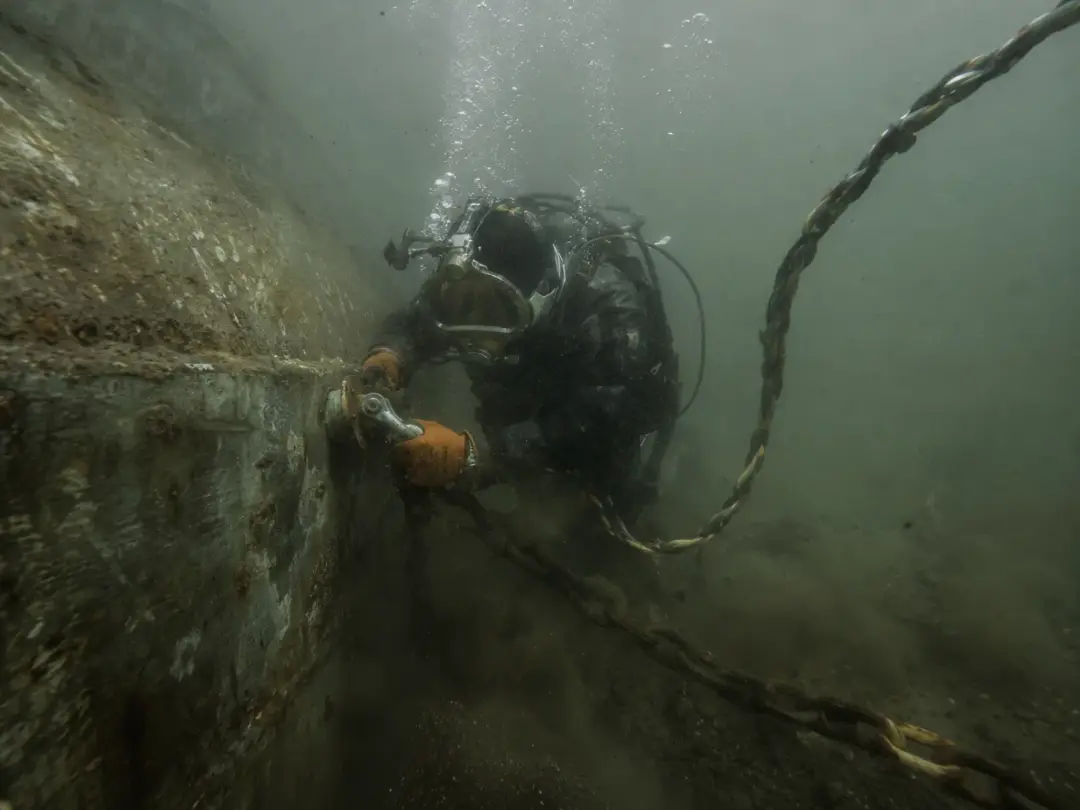
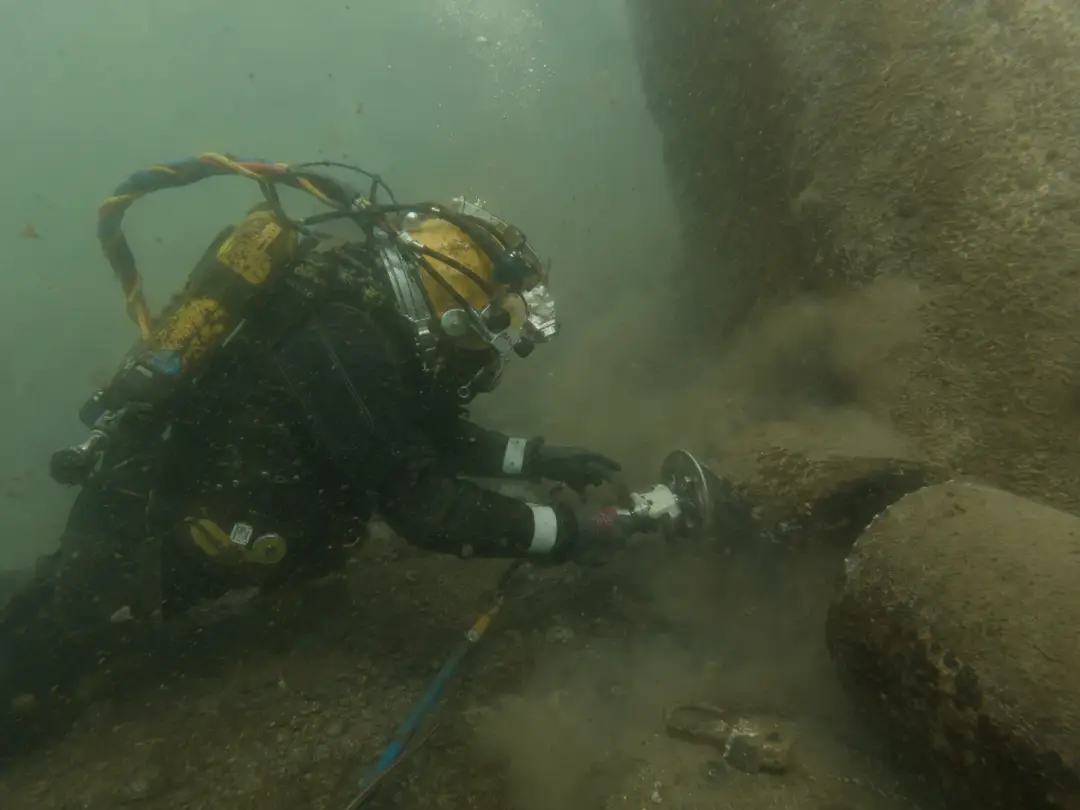
The divers surveyed the sunken sections: how they lay on the bottom, their list, the condition of the hull and the places where integrity had been lost. From those findings a plan was drawn up and the method chosen — restoring the sections' own buoyancy by blowing the compartments.
- 2
Sealing the compartments
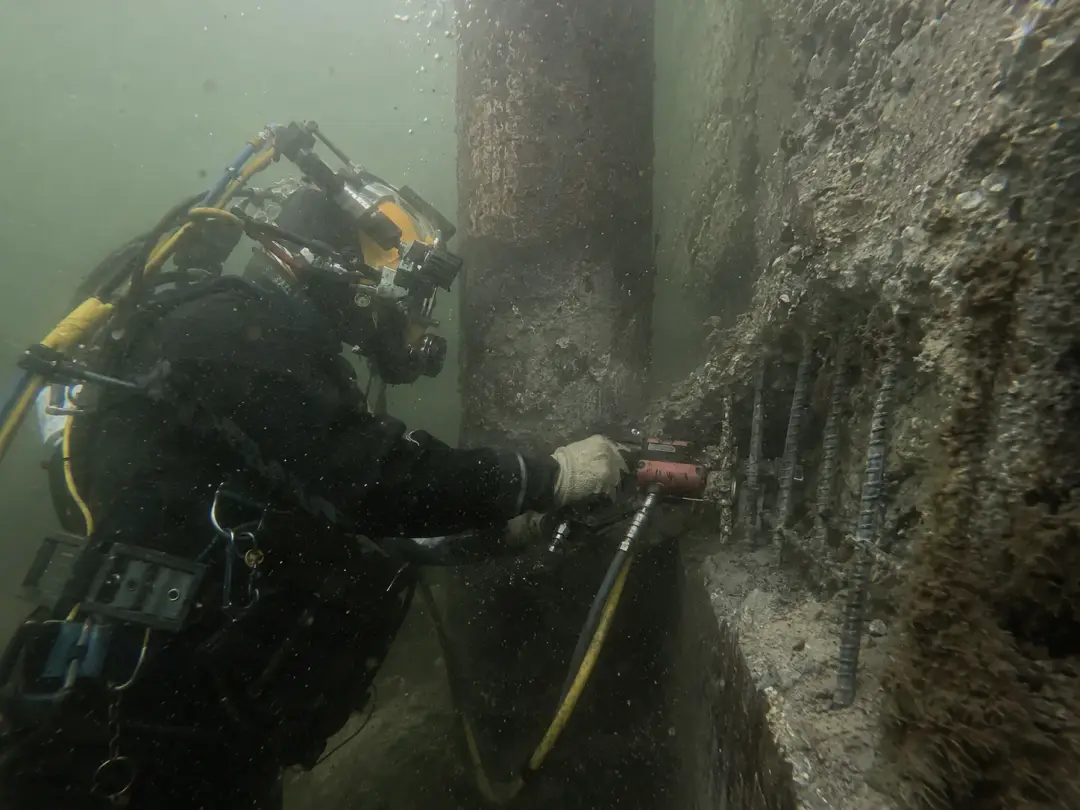
Underwater, the divers sealed the damage and closed the openings through which the section was open to the sea. This is the key stage: without a tight compartment the air simply escapes into the water during blowing.
- 3
Rigging the slings and supplying air
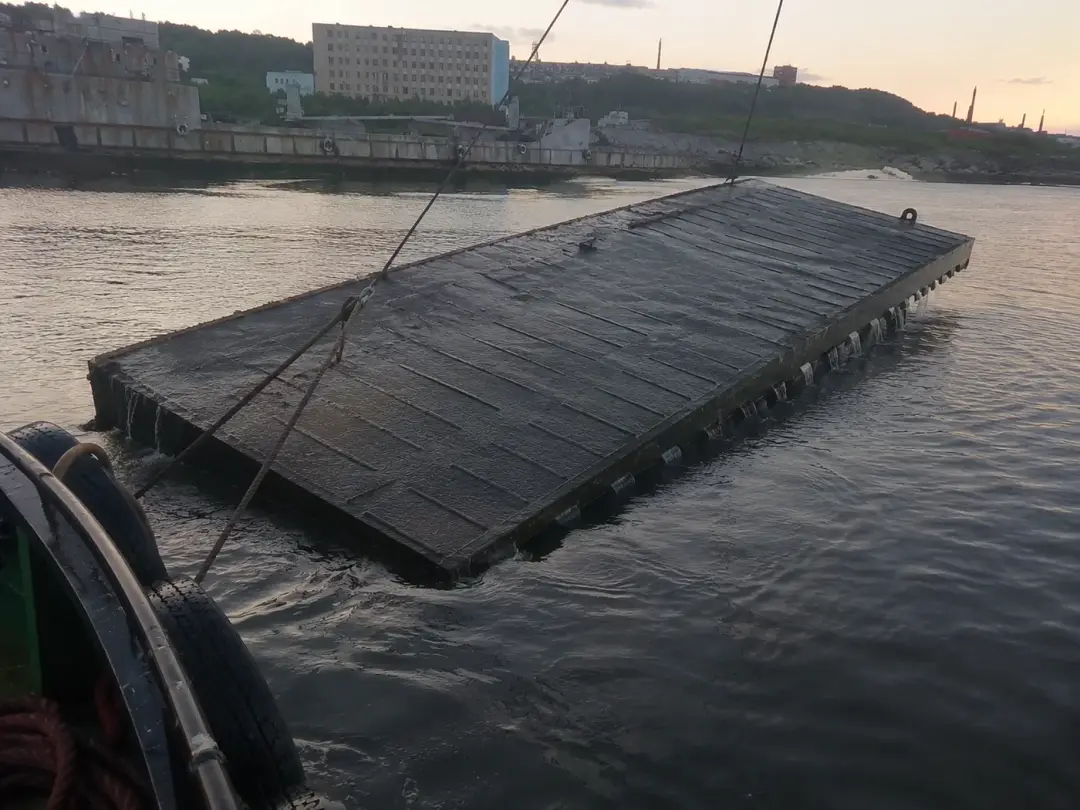
The divers rigged the slings, after which compressed air was fed into the compartments, displacing the water. The process was monitored continuously: the section was brought up evenly, avoiding any snatch or capsize.
- 4
Surfacing and mooring
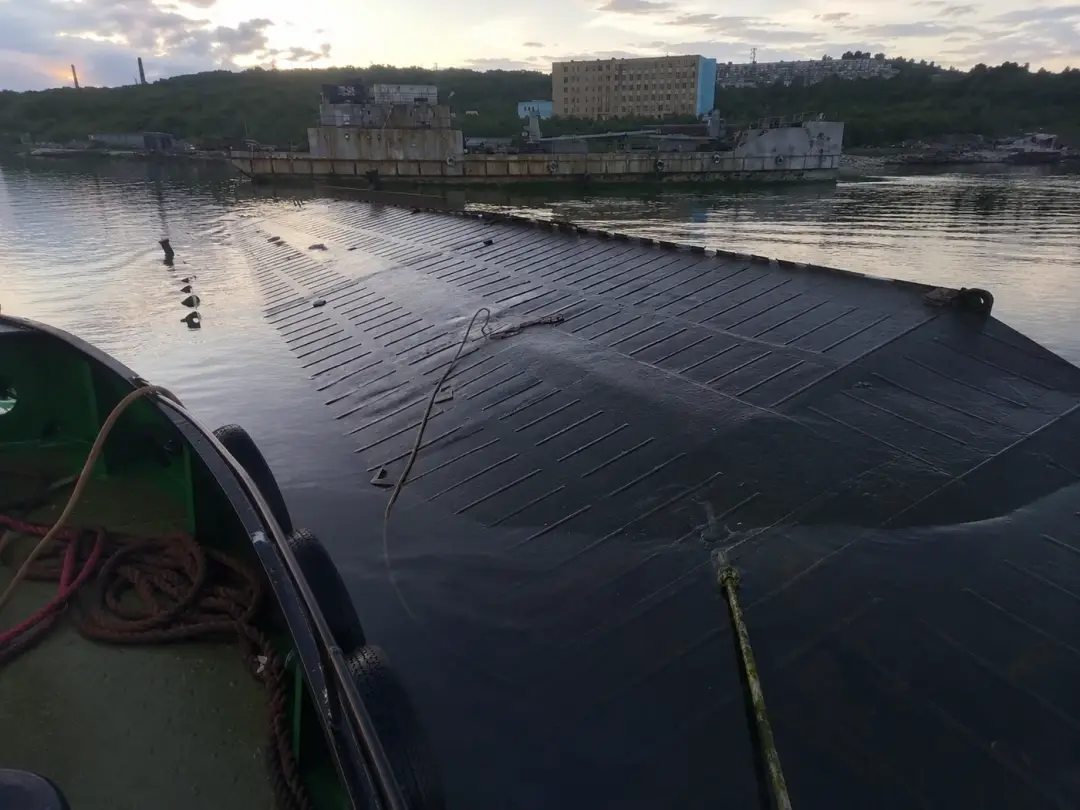
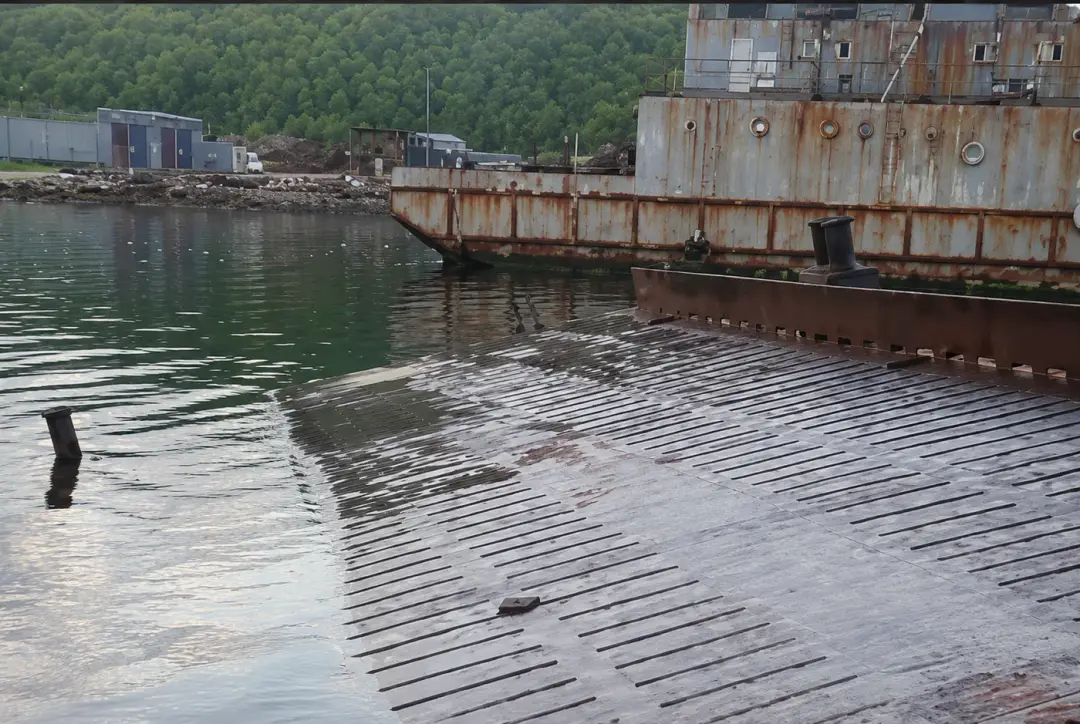
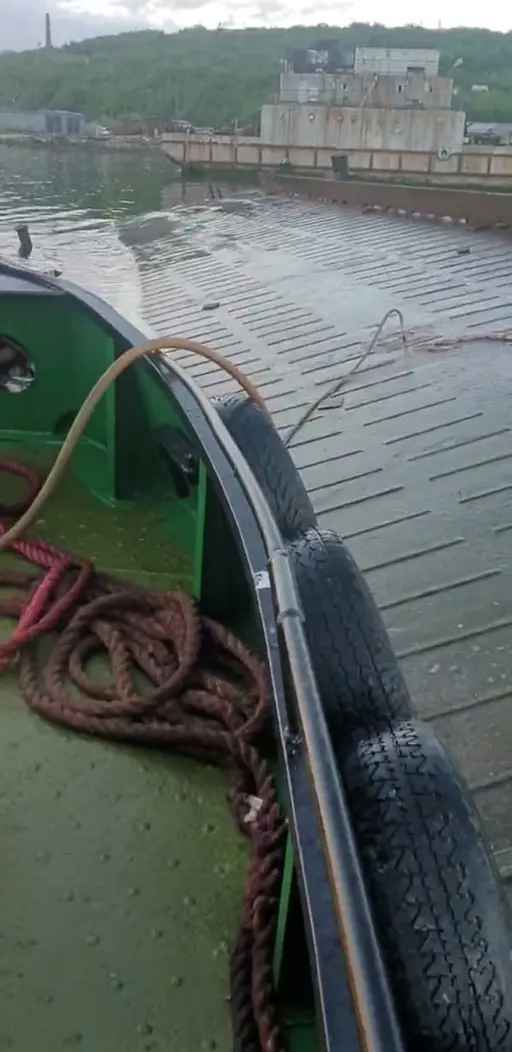
The section surfaced — the moment visible in the project photographs: water running off the deck, a tug working alongside with lines made fast. The surfaced sections were towed away and the pier was put back afloat.
The outcome
The sunken pier sections were raised and returned afloat — the pier is back in service. The client received completion certificates and photo and video evidence of every stage of the operation.
Why raising by blowing is a job for an experienced spread
From the outside, inflating a pontoon looks simple. In practice it means calculating stability at every stage of the ascent, coordinating divers, compressor operators and the tug, and being ready to vent the air instantly if the section starts to list. A mistake during the ascent turns the lift into a second sinking — this time with damage. That is precisely why work like this is entrusted to contractors with salvage experience.
How the work went — shots from site
 Video
VideoHas a pier section, pontoon or craft sunk? We will survey it, do the calculations and raise it — with documentation and video evidence. We work across Kola Bay and the Murmansk Region.
Request a quote