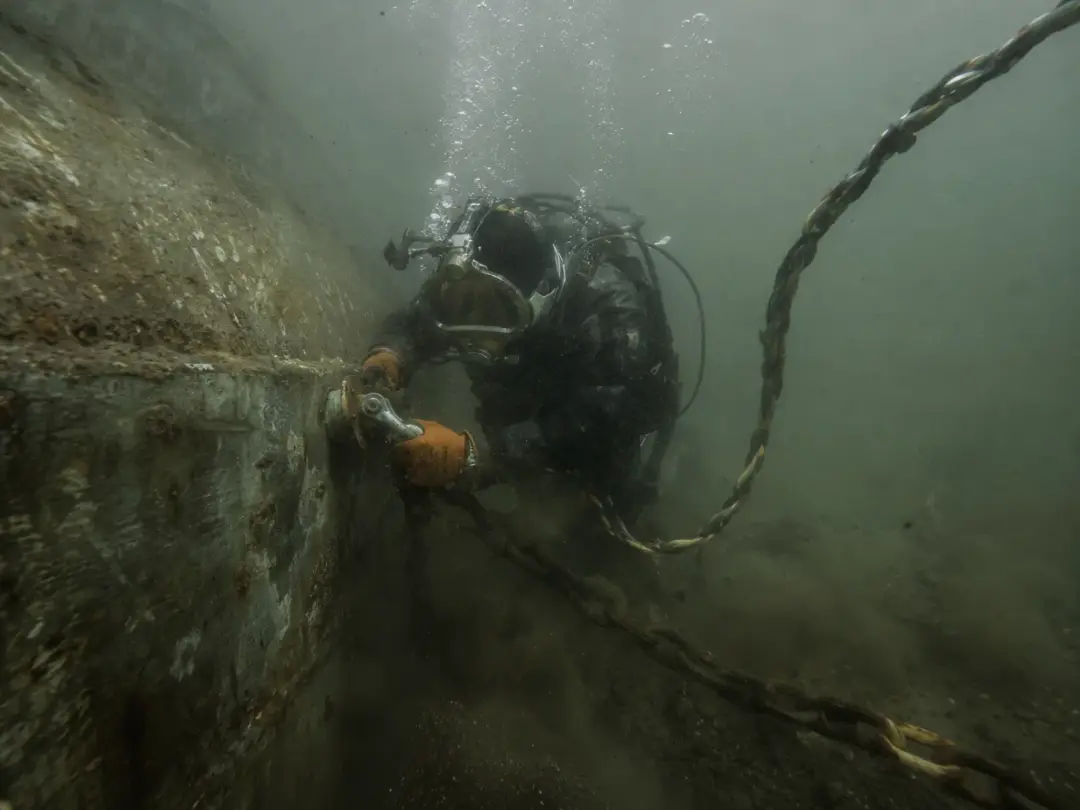
A sunken vessel is never raised by improvisation — every operation is worked out in advance: how the hull is lying, what it weighs together with the water and the silt, where it can be taken hold of and what will happen at the moment it breaks free of the bottom. Here are the salvage methods that exist, how the method is chosen and how such operations actually go — with examples from our work in Kola Bay.
Where every lift begins: the survey
The first step is a diver survey. The divers establish how the hull lies on the bottom, its list and trim, the condition of the plating, the nature of the seabed and the suction holding it — how firmly the hull is stuck to the bottom. Without that you can neither choose a method nor calculate the forces: two identical vessels that have sunk in different ways are raised by different schemes.
The survey produces a plan of how the object lies and a video record. On that basis the operation is designed: the method, the points where forces will be applied, the sequence of steps and the equipment to be used.
The main salvage methods
- Lifting by crane or floating crane
- The hull is rigged and lifted by crane. This suits boats, small vessels and plant; a large hull needs a floating crane of the right capacity, and divers prepare that work too — rigging the slings and controlling the position of the object.
- Salvage pontoons
- Pontoons are attached to the hull and blown with compressed air: the air displaces the water, the pontoons gain buoyancy and lift the object off the bottom. The method works well where the hull itself is not watertight and its own buoyancy cannot be restored.
- Blowing the compartments
- The vessel's compartments are sealed and the water is displaced from them with compressed air — the hull surfaces on its own buoyancy. This is the most engineering-led method: it requires every breach to be sealed and constant monitoring during the ascent.
- A combined scheme
- In real operations the methods are usually combined: slings hold the hull, pontoons add lifting force and blowing the compartments brings the vessel's own buoyancy back. Which combination will work is shown by the survey and the calculations.
What is calculated before the lift
- The lifting mass — the weight of the hull together with the water in the compartments, any cargo and the silt. It is always greater than the vessel's stated weight.
- The suction of the seabed: a silty bottom holds the hull, and the breakout force can noticeably exceed the weight of the object. Where the suction is strong, the ground alongside the hull is jetted away.
- The points where forces are applied — where the hull will take the load and where it would crumple or break.
- Stability during the ascent — how the hull will behave at the moment of breakout and on the way to the surface. A mistake here turns the lift into a second sinking.
Preparing the hull underwater
- 1
Sealing
The divers close up holes and leaks — with plugs, patches and welding. Without a tight hull, blowing is pointless: the air simply escapes into the water.
- 2
Rigging the slings
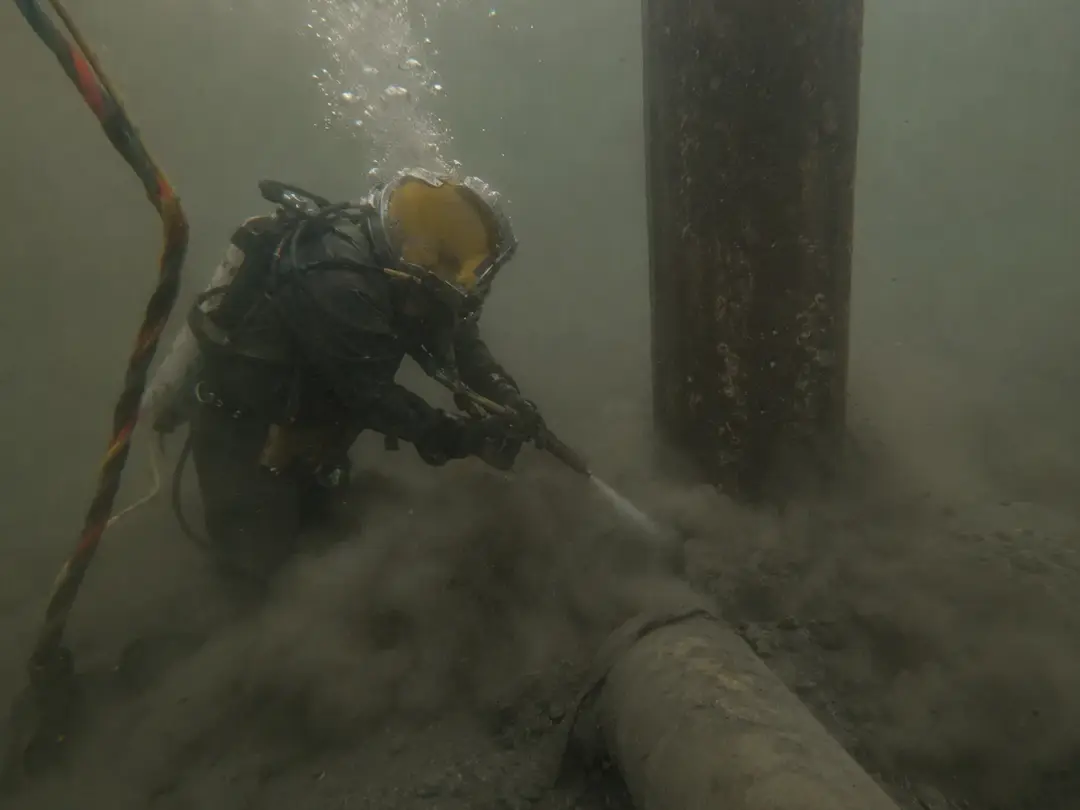
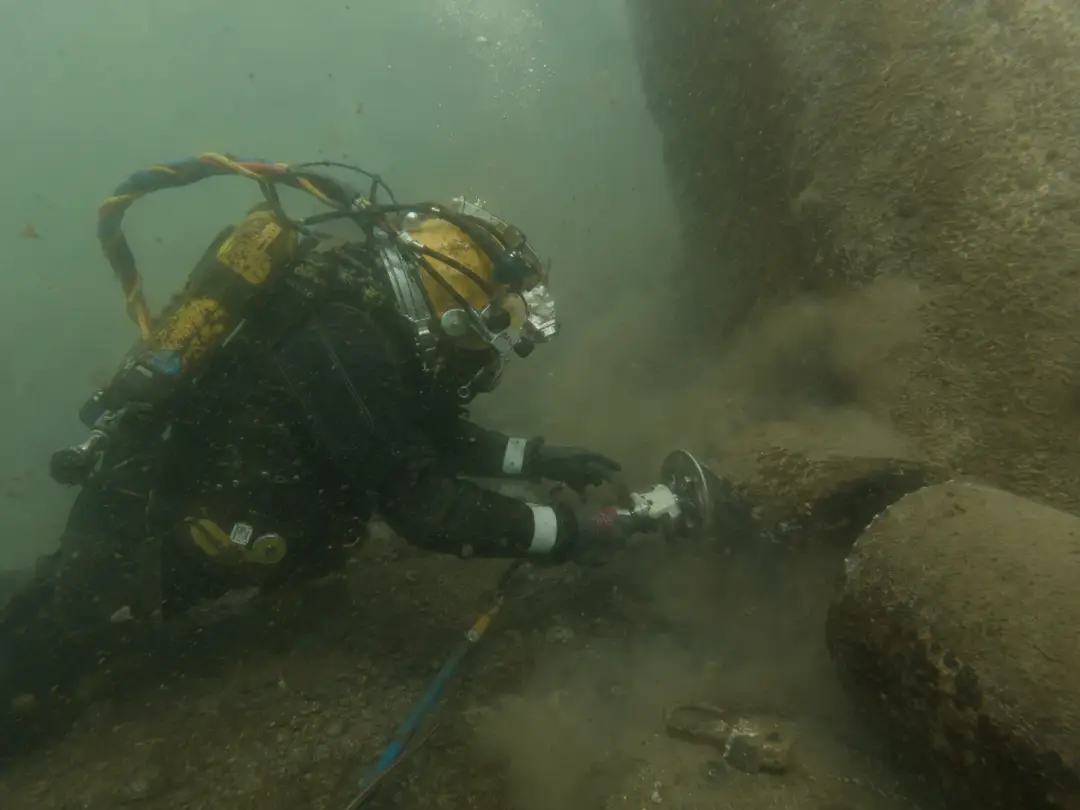
Tunnels are washed out under the hull and slings or lifting belts are passed through them. All of it is done by feel and over the video link — often in confined waters, close to quays and other vessels.
- 3
Fitting pontoons and air lines
Pontoons are attached to the hull and hoses are run from the compressors to the compartments. Every connection is checked before blowing begins.
The ascent: the most critical moment
Air is fed in gradually and the hull is brought up in the calculated order — the stern first, then the bow, for example: that way the object leaves the water without snatching and without dangerous heeling. Throughout, the spread stands ready to vent the air instantly if the hull behaves differently from the calculations. Once afloat, the object is taken in tow and brought alongside, set down on a drying berth or handed over to a dock — depending on what is to become of it.
What it looks like in practice
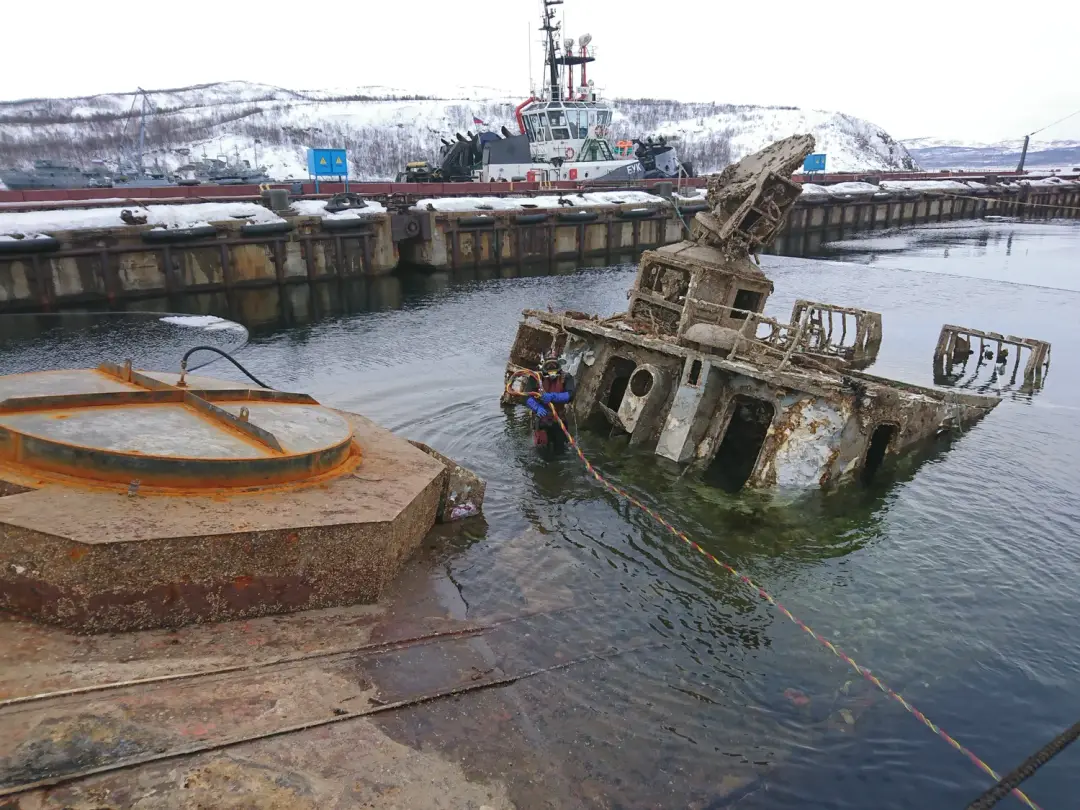
In Roslyakovo our spread took part in raising the corvette MPK-56 in the waters of Shipyard No. 82: the divers rigged slings and pontoons under the hull, sealed the leaks and fed compressed air into the compartments — the stern surfaced first, then the bow, and the ship was set down on the drying berth.
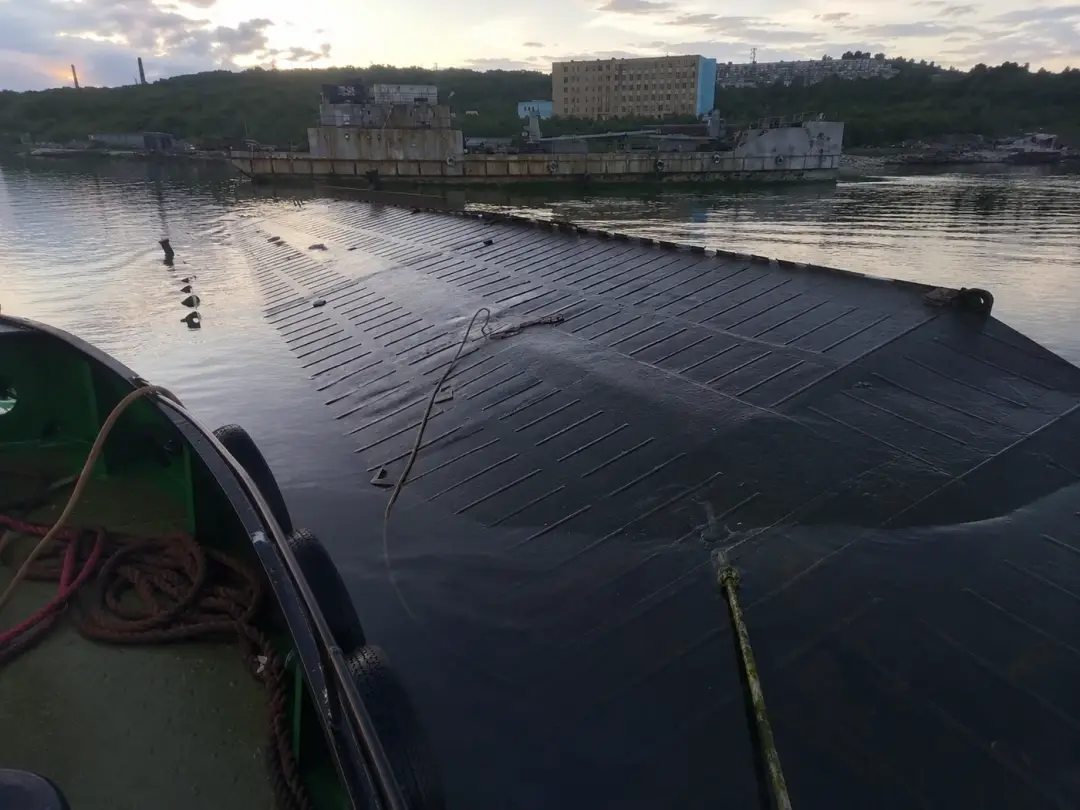
In Severomorsk we raised sunken sections of a floating pier: the compartments were sealed and blown with compressed air, the sections surfaced and the pier was put back afloat. Both cases come with photo reports from site.
If a vessel of yours has sunk
- Do not put off the survey: a hull on the bottom keeps deteriorating, and the fuel oil and technical fluids inside it are an environmental risk for which the owner answers.
- Coordinate with the port authority — it sets the timing and the procedure for removing sunken property.
- Order a diver survey: it gives an accurate picture and the basis for the calculations. Without one, no reputable contractor will quote a price for the lift.
- After that come the calculations, the plan and the operation itself. The sooner the work starts, the simpler and cheaper the lift.
Frequently asked questions
- What does it cost to raise a sunken vessel?
- It depends on the size and position of the hull, the depth, the suction of the seabed and the method chosen. The exact cost is worked out as a quotation after the diver survey — which is the first step of any operation.
- Can vessels be raised in winter?
- Yes. Kola Bay does not freeze and divers work all year round, including through the polar night. On frozen fresh water we work through an ice opening.
- What depth can you work at?
- To 60 metres — with full dive support: communications with the diver, hot-water suits, compressors and a decompression chamber.
- Is the owner obliged to raise a sunken vessel?
- If the hull obstructs navigation or port infrastructure, or creates an environmental hazard, removal is arranged by the owner, while the timing and procedure are set by the port authority. The earlier the survey starts, the cheaper the operation.